
A Semax certificate of analysis (COA) is a lab report that tells you what’s actually in the vial, and you can read one in about ten minutes with no chemistry degree. Check four things: purity percentage, identity confirmation, the testing lab’s details, and whether the batch number matches the product in your hands. If any of those are missing or don’t line up, stop there. Before you trust a report, compare it against a real semax listing so you know what a properly documented product looks like.
Vapers already know this habit. You check a lab report before trusting a juice or a coil, and a COA deserves the same scrutiny. It’s a paper trail, and paper trails can be sloppy, recycled, or flat-out fake.
This guide walks through the report line by line in plain language, explains terms like HPLC (a method that separates a sample into its parts) and mass spectrometry (a method that confirms what the molecule is), and flags the red flags that should make you walk away. Much like choosing the healthier choice starts with reading the evidence, judging a product starts with reading the document behind it. This is educational only, not medical advice.
What You Need Before You Start Reading
COA Basics in Plain English
A certificate of analysis, or COA, is simply a lab report for one specific batch. It lists what was tested, how it was tested, and what the results were. If you’ve ever checked a lab sheet for nicotine strength on an e-liquid, you already get the idea. Whether you’re one of the complete beginners or have tried plenty of types of vape that habit of checking the paperwork carries over nicely.
Who issued the report matters a lot. A manufacturer-issued COA comes from the seller’s own testing, so they’re grading their own homework. An independent third-party lab has no stake in the sale, which makes its results far more trustworthy. Both can be useful, but the independent one carries more weight.
Before you start reading, gather these:
- The COA file (PDF or image)
- Your vial label showing the lot number
- Your order confirmation
- The testing lab’s contact or verification page
- A simple calculator
With those in hand, you’re ready to dig in.
Safety Warnings and Red Flags to Stop On
Before you buy or use anything, treat these as hard stop signs. Pausing costs you a few days. Ignoring them can cost a lot more.
Stop if you see any of the following:
– No batch or lot number. Without one, you can’t tie the report to the vial in your hand.
– Mismatched names. The product, compound, or company on the COA doesn’t match the label or the listing.
– Missing lab details. No lab name, address, contact info, or signature usually means nobody stands behind the numbers.
– An edited-looking document. Watch for odd fonts, uneven spacing, blurry patches, or a chromatogram that looks pasted in.
– Medical claims. Any seller promising that a peptide treats, cures, or fixes a condition is a bad sign. Reputable sellers of research compounds don’t make those promises.
Even a spotless COA only lowers your risk. It can’t eliminate it. Purity says nothing about how your body might react, and just like with anything else you put in your system, there can be unwanted side effects you won’t know about until it’s too late.
If you’re thinking about using a peptide like Semax, talk to a qualified healthcare professional first, especially if you take medications or have a health condition. Also check your local laws. Semax is sold for research purposes in many places, and rules vary widely.
When in doubt, walk away. A seller worth buying from won’t mind you asking questions, and a good community of careful buyers will back you up on that.
How to Read a Semax COA, Step by Step
Matching the Batch Number and Lab Details
Before you look at a single percentage, make sure the COA belongs to the vial in your hands. A report for a different batch tells you nothing about yours, no matter how impressive the numbers look.
Start with the paperwork basics and work down this list:
- Confirm the product name and peptide sequence match Semax.
- Match the batch or lot number to the one printed on your vial or box.
- Check the testing date and the lab name.
- Find the HPLC purity percentage.
- Look at the chromatogram peak.
- Confirm identity through mass spectrometry (the molecular weight).
- Check for extras like endotoxin, heavy metals, or residual solvents.
- Note the stated quantity per vial.
Steps one through three are about matching the document to your product. The rest we’ll cover in the next sections.
A legitimate lab header usually shows a real company name, a physical address, a phone number or email, and sometimes accreditation details. Look for a named analyst or authorized signature, plus a report or sample ID. If the lab has a website, it should exist and look like an actual business. Missing contact info or a generic, unsigned header is worth a pause.
Understanding the Purity Percentage and the HPLC Graph
Here’s the part of the COA that gets the most attention: the purity percentage. It comes from a test called HPLC, which stands for high-performance liquid chromatography. In plain terms, the lab pushes your dissolved sample through a specialized column, and each ingredient travels at a different speed. That sorts the mixture into its parts so the lab can measure how much of it is the target peptide and how much is something else.
The result shows up as a graph called a chromatogram. Think of it like a lineup of runners finishing a race. In a good sample, one tall, narrow, sharp peak towers over everything else. That’s your Semax. A few tiny blips near the baseline are normal, since no peptide is perfectly pure.
A messy graph is the warning sign. Look for several mid-sized peaks, a lumpy or split main peak, or a baseline that wanders up and down. Those suggest leftover byproducts or a poorly run test.
Next, check the number. You’ll often see 98% or higher cited as a benchmark for research-grade peptides, and the purity percentage should match what the graph shows. If the chart looks rough but the report claims 99.9%, that mismatch is worth questioning.
One caution: no single number guarantees quality. A high percentage says nothing about whether the compound is actually Semax, which is where identity testing comes in.
Confirming It’s Actually Semax: Identity Testing
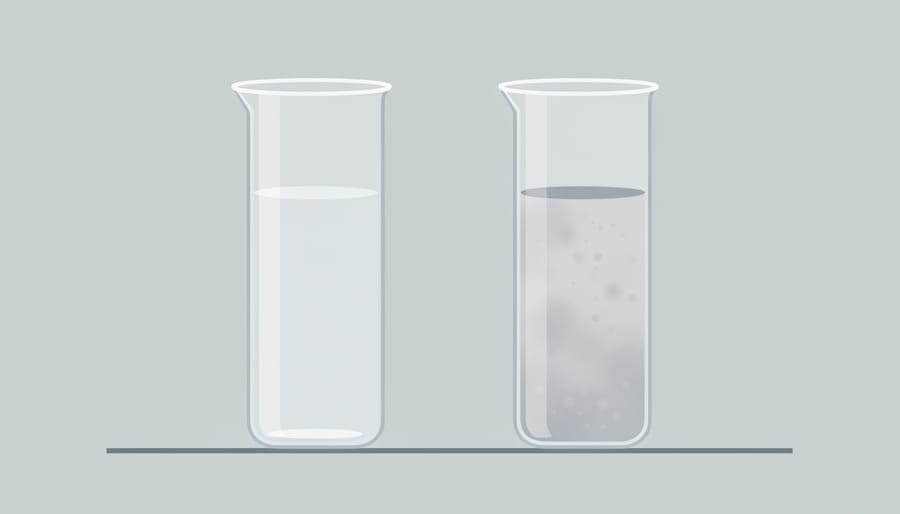
A high purity number only tells you how much of the sample is one single thing. It doesn’t tell you what that thing is. A vial could be 99% pure and still hold the wrong compound, which is why a good COA includes identity testing alongside the purity result.
The usual tool here is mass spectrometry, often shown as “MS” or “LC-MS” on the report. In plain terms, it weighs the molecules in your sample with extreme precision. Every peptide has a specific molecular weight based on its building blocks, so the lab compares the measured value to the expected value for Semax. Semax is a short peptide, and its published molecular weight sits at roughly 813 daltons. If the report shows a measured weight close to that figure, it supports the claim that the vial contains the right compound.
Check three things on the report:
– An expected weight stated for Semax
– A measured weight listed right next to it
– A close match between the two, with only a tiny difference
If the two numbers are far apart, or the identity section is missing entirely, treat that as a red flag. Purity without identity is only half the story.
Verifying the COA and Deciding What to Do Next
A COA is only as good as the lab behind it, so the last step is checking the document itself. Start by contacting the lab directly, using the contact details you find on its own website rather than the ones printed on the PDF. Ask whether they issued a report with that batch number and date. A legitimate lab can usually confirm quickly, and a lab that has never heard of the batch tells you everything you need to know.
Next, ask the seller for the raw chromatogram file, the original data export rather than a screenshot. Vendors who test honestly are often happy to share it, and the willingness to do so says a lot about their transparency. It also helps to compare COAs across batches. Real testing shows small natural variation in purity and peak shape from one batch to the next. If every report shows the identical number and the identical graph, that’s a reason to be suspicious.
If something looks off, don’t panic, just work through it. Ask the vendor specific questions about the mismatch. Request a retest from an independent lab, and ask who pays for it. If answers turn vague or defensive, walking away is a perfectly reasonable choice. There will always be another vendor, but you can’t undo a bad purchase.
Have you dealt with a vendor who was open about their testing, or one who dodged your questions? Share your experience in the comments so the rest of the community can learn from it.
Common Questions About Semax COAs
Readers ask us the same handful of questions about Semax COAs again and again, so here are the quick answers. Nothing here is medical advice, and a COA is only one piece of the puzzle.
Is 99% purity always better than 98%?
Not necessarily. A one-point gap is small, and what matters more is whether the HPLC graph shows one clean, dominant peak and whether the identity test matches Semax. A tidy 98% report with a matching batch number beats a flashy 99% with nothing to back it up.
Can a vendor’s in-house COA be trusted?
It can be a starting point, but it’s weaker than a report from an independent third-party lab, because the seller has a stake in the result. Think of it like a brand grading its own homework. Look for a third-party lab you can contact directly.
What if the COA has no chromatogram?
Treat that as a red flag. A purity number with no graph behind it is just a claim, so ask the seller for the raw chromatogram file, and if they can’t or won’t provide it, consider walking away.
Does a COA mean the product is safe to use?
No. A COA describes what was tested in one batch at one point in time, and it can lower your risk without removing it. Anyone considering a peptide should talk with a qualified healthcare professional and follow local laws.
Two more questions come up a lot. How old can a COA be? There’s no universal rule, but the report should be tied to the exact batch you’re holding, so an undated or recycled document is a reason to ask questions. And how often should a vendor retest? Ideally, every new batch gets its own report rather than one old document reused for months.
Got a question we didn’t cover, or a vendor experience worth sharing? Drop it in the comments. The best tips in this community usually come from readers comparing notes, and we’d love to add yours to the conversation.
So there’s your checklist. Reading a Semax COA comes down to four quick checks: who ran the test, whether the batch number matches your vial, what the purity percentage and HPLC graph actually show, and whether mass spectrometry confirms it’s really Semax. Then comes the step people skip: verifying the document itself by contacting the lab and comparing reports across batches.
Keep one thing in mind, though. A COA is a tool for making informed decisions, not a guarantee. A clean report lowers your risk, but it can’t promise anything on its own. And since this is educational, not medical advice, anyone thinking about using a peptide should talk with a qualified healthcare professional and follow local laws.
Now we’d love to hear from you. Which vendors have been open about their testing? Did you ever catch a COA that looked off? Drop your tips and experiences in the comments so the whole community can shop a little smarter.


